A moving truck can be packed in an hour and still create damage that takes months to replace. The difference is rarely how hard people work. It is knowing how to load a moving truck in the right sequence, keeping weight balanced, and protecting the items that matter most before the truck door closes.
Whether you are moving from a Hartford apartment, relocating your family across Connecticut, or loading a storage unit, a thoughtful loading plan helps prevent shifting, broken furniture, crushed boxes, and a frustrating unload. Start with the truck layout, not the first box you see.
Prepare the Truck Before You Lift Anything
An empty truck is your chance to create order. Before loading, make sure you have enough moving blankets, stretch wrap, mattress bags, tape, tie-down straps, and a hand truck or appliance dolly. A few extra supplies cost far less than repairing a scratched dresser or replacing a damaged television.
Walk through the truck and identify its anchor points, rails, wheel wells, and interior dimensions. Most moving trucks have a lower section near the cab called the bulkhead. This is where your heaviest, sturdiest belongings should go. It gives the load a solid foundation and helps keep weight toward the front of the truck.
Keep a clear path from the door to the front wall. You will make many trips, and a blocked walkway encourages rushed lifting and awkward turns. If rain is possible, protect the truck floor with flattened boxes or a clean tarp until you are ready to load.
How to Load a Moving Truck in the Right Order
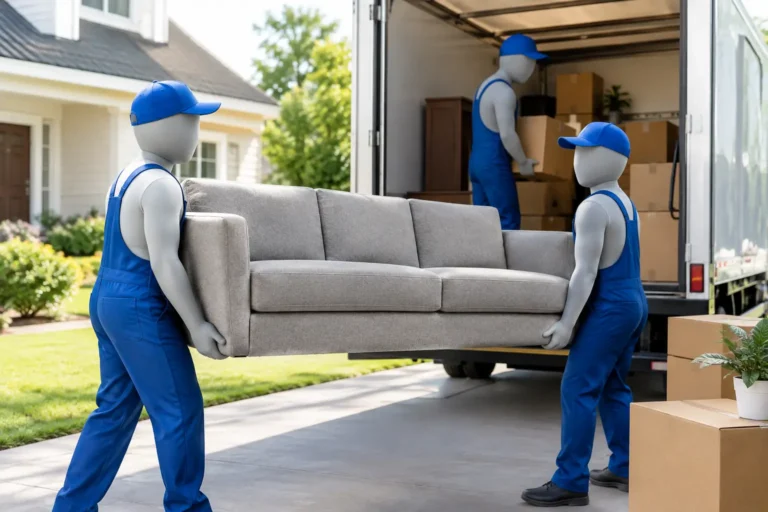
Load the largest and heaviest items first. Place appliances, dressers, bookcases, sofas, and heavy tables against the front wall of the truck. Distribute their weight from side to side instead of placing every heavy item on one side. A balanced truck handles better on the road and is less likely to shift during turns or stops.
Refrigerators, washers, dryers, and other appliances need special attention. Keep them upright whenever possible, secure doors and cords, and use a dolly designed for the item’s weight. If a refrigerator must be tipped during handling, allow it to stand upright for several hours before plugging it in at the new home.
Once the first row is in place, use moving blankets to separate wood, glass, metal, and upholstered pieces. Wrap furniture fully rather than placing one blanket on a vulnerable corner. Then use straps to secure the row to the truck’s rails. Straps should hold the load in place without being tightened so much that they dent wood or damage upholstery.
Build the load in sections. Complete one secure wall or tier before moving backward through the truck. This approach leaves fewer gaps and prevents smaller items from being trapped beneath larger pieces later.
Keep Heavy Weight Low and Forward
Weight placement affects both safety and drivability. The truck’s center of gravity should stay low, which means heavy boxes belong on the floor, not stacked at shoulder height. Put dense cartons containing books, tools, dishes, or files on the bottom. Lighter boxes with linens, lampshades, pillows, and clothing can fill space above them.
Avoid loading all heavy belongings at the rear near the door. That can make the truck feel unstable and harder to control. A front-heavy, evenly balanced load is generally safer, but do not overload one side of the truck. Check your work every few feet of loading and correct an imbalance early.
Protect Furniture Before It Goes Inside
Furniture damage often happens before an item is even in the truck. Remove legs from tables when practical, take cushions off sofas, and disassemble bed frames. Place screws, bolts, and small hardware in labeled bags, then tape those bags to the corresponding furniture piece or keep them in one clearly marked essentials box.
Wrap wood furniture in moving blankets and secure the blankets with stretch wrap. Do not put tape directly on finished wood, leather, or delicate surfaces. It can leave residue or pull away finish. For upholstered items, use plastic furniture covers or shrink wrap over a moving blanket when weather or dirt is a concern.
Mirrors, framed artwork, and glass tabletops should travel vertically, never flat. Wrap each item, use a mirror box or sturdy cardboard protection, and place it between mattresses, sofas, or other padded items where it cannot slide. Mark glass cartons clearly, but do not rely on a label alone. Their position inside the load matters far more.
Use Boxes to Fill Gaps, Not Support Heavy Furniture
Properly packed boxes are one of the best tools for creating a stable moving truck load. Stack boxes with the heaviest cartons at the bottom and lighter cartons on top. Keep stacks square and level. If a stack leans, rebuild it instead of trying to brace it with a random loose item.
Boxes work well around furniture, under tables, and in narrow spaces between larger pieces. They should fill gaps, but they should not bear the weight of a heavy dresser, piano, or appliance. A crushed box can create an empty pocket in the load, allowing everything above or beside it to shift.
Soft items are useful gap-fillers. Use bags of linens, pillows, comforters, and sofa cushions to pad spaces around furniture and prevent movement. Avoid using trash bags for heavy or sharp belongings. They tear easily and make it difficult to tell what is inside.
Do Not Forget the Awkward Items
Long, narrow belongings such as floor lamps, curtain rods, broom handles, and rolled rugs can become loose projectiles if they are loaded as an afterthought. Bundle and secure them along the side wall or place them in a protected channel between larger items.
Mattresses and box springs can be loaded vertically along the truck walls after the heaviest furniture is secured. They add useful padding for mirrors and framed items. Do not place heavy boxes against a mattress, however, because they can leave permanent indentations.
For televisions and electronics, use original boxes if you still have them. If not, use a properly sized moving box with firm padding on every side. Keep televisions upright and do not stack anything on them. Take a photo of cable connections before disconnecting equipment to make setup easier at the new address.
Strap Every Completed Section
A truck load should not depend on the rear door to keep it in place. After completing each section, run a tie-down strap across the load and attach it to the truck’s interior rails. Add another strap as you build higher or move toward the rear.
This step matters most when a move includes multiple stops, steep driveways, or Connecticut roads with frequent turns and uneven pavement. Even a carefully packed truck can shift when a driver brakes suddenly. Straps turn a stacked load into a secured load.
Before closing the door, look for open pockets near the top, sides, and rear. Fill those spaces with soft, light belongings. Then give the load a gentle test. Nothing should wobble, lean, or roll when you press against it.
Plan for What You Need First
The last items loaded will be the first items unloaded, so save your immediate essentials for the rear of the truck. This may include cleaning supplies, basic tools, toilet paper, medications, phone chargers, bedding, and the box containing hardware for beds and furniture.
Keep personal documents, jewelry, cash, keys, and irreplaceable photographs with you rather than in the moving truck. The same applies to flammable, hazardous, or perishable items. Gas cans, propane tanks, fireworks, paint thinner, and similar materials do not belong in a moving truck.
If the move feels larger than your available time, equipment, or lifting ability, professional help is a practical safety decision. Trained crews know how to protect stairways, carry oversized pieces, secure a truck efficiently, and reduce the risk of injury. Advantage Moving & Storage provides licensed, insured moving support for Connecticut customers who want careful handling without the guesswork.
A well-loaded truck is not just fuller. It is balanced, padded, secured, and arranged so that every item arrives ready for the next chapter.