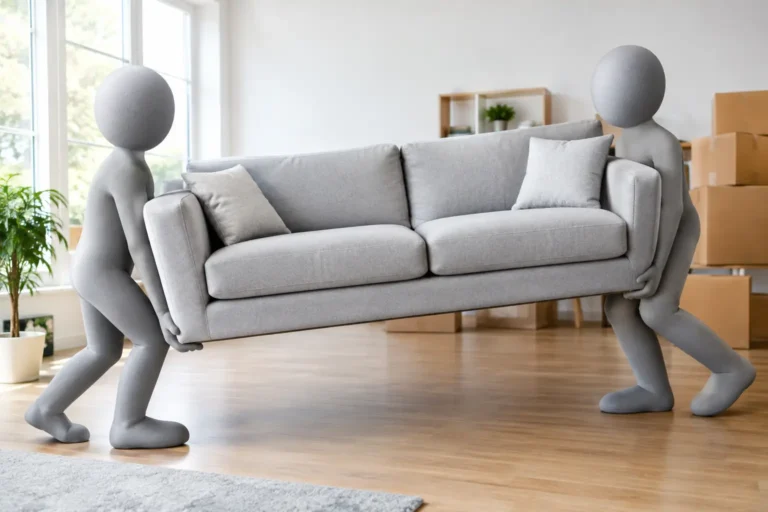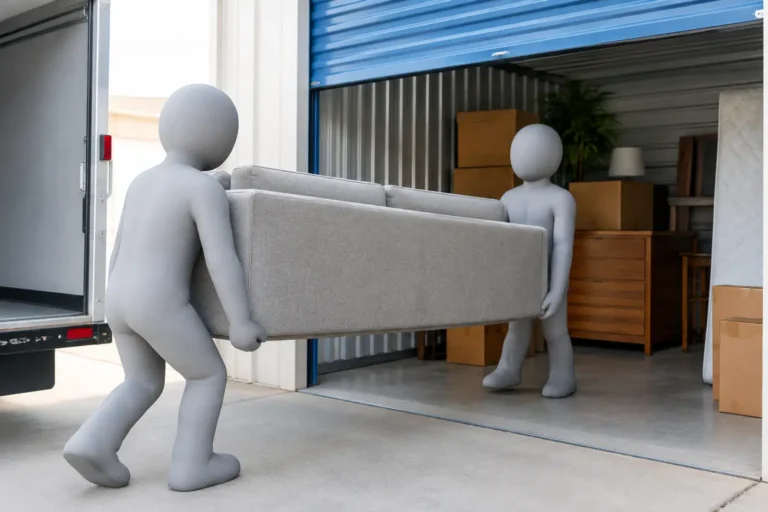
A sofa that fits perfectly in a first-floor living room can become a serious problem at the bottom of a narrow staircase. To move heavy furniture upstairs safely, you need more than strength. You need a clear route, the right equipment, enough capable hands, and a plan for what happens at every landing and turn.
Trying to force a heavy dresser, sectional, appliance, or oversized bed frame up the stairs can damage walls, railings, floors, and the furniture itself. More importantly, it can cause a painful injury in seconds. A careful approach protects your home and keeps a difficult move from becoming an expensive setback.
Start by Measuring the Stairway and the Furniture
Before lifting anything, measure the piece you are moving and the path it must travel. Check the furniture’s height, width, depth, and diagonal measurement. Then measure the staircase width, ceiling height, landing depth, hallway openings, door frames, and any tight corners near the top or bottom of the stairs.
A piece may fit through a doorway but fail at a 90-degree turn on a landing. This is common with large couches, armoires, king-size headboards, and bulky recliners. If the measurements are close, remove detachable legs, drawers, shelves, cushions, and hardware first. Reducing even a few inches can make the difference between a controlled move and a stuck piece.
Also look for obstacles that change the route. Wall art, light fixtures, shoe racks, rugs, small tables, and loose cords should be removed before the lift begins. A clear stairway gives everyone room to place their feet and communicate.
Know When the Furniture Will Not Fit
Some pieces simply cannot make the turn indoors, even when they look close. Do not keep pushing, twisting, or scraping in the hope that it will work. Repeated attempts can crack a wood frame, tear upholstery, gouge drywall, or damage stair railings.
When an interior route is not possible, a professional team may use another entrance, take apart the item when appropriate, or arrange a controlled exterior move. The safest solution depends on the furniture, the home layout, and weather conditions.
Prepare the Furniture Before You Lift
Heavy furniture is easier and safer to handle when it is emptied and protected. Remove everything from drawers, cabinets, and shelves. Drawers can slide open unexpectedly on an incline, shifting the weight at the worst possible moment.
Wrap wood furniture in moving blankets to protect corners and finished surfaces. Use stretch wrap to secure blankets and keep doors or drawers closed. For upholstered furniture, protective wrap helps prevent dirt, snags, and scuffs while passing close to walls.
Disassemble what you reasonably can. Bed frames, dining tables, modular sectionals, and some desks often travel upstairs more safely in separate components. Keep screws and small hardware in labeled bags, and tape those bags to the corresponding item or store them in a clearly marked box.
Do not use plastic wrap as the only protection on a polished wood surface, especially during a long move. It can trap moisture or rub against the finish. Moving blankets provide the cushioning that matters when navigating stairs.
Use Equipment Made for Heavy Furniture
The right tools reduce strain, improve control, and protect the house. Furniture sliders can help position an item on the floor before and after the staircase, but they are not designed to carry furniture up stairs. Hand trucks and appliance dollies can be useful for certain items, though stairs require experienced handling and secure strapping.
For many large pieces, shoulder moving straps or forearm lifting straps can help distribute weight between two people. These tools are useful only when both movers understand how to use them and can maintain stable footing. A strap does not make an oversized couch light, and it cannot compensate for a route that is too tight.
At minimum, have moving blankets, stretch wrap, work gloves with a firm grip, and floor protection ready. Gloves should improve traction without being bulky. Avoid slippery gloves, loose clothing, open-toe shoes, or socks on hardwood stairs.
Assign Positions Before Moving Heavy Furniture Upstairs
Never begin a stair carry without deciding who is leading, who is following, and who will call the commands. The person moving backward needs clear direction from the person who can see the stairs ahead. Use simple calls such as “step,” “stop,” “lift,” “lower,” and “turn.” Everyone should respond immediately.
Generally, the stronger or more experienced mover takes the lower position because that person carries more of the load. But the best arrangement depends on the furniture’s shape, the incline of the stairs, and each person’s height and ability. Keep the item as level as possible, with a slight angle only when needed to clear the ceiling or turn.
Do not rush because the piece feels manageable on the first few steps. Stairs become harder as fatigue builds. Pause at a landing if there is a safe place to do so, reset your grip, and confirm the next movement before continuing.
Lift With Your Legs, Not Your Back
Keep your back straight, bend your knees, and hold the furniture close to your body. Do not twist while carrying weight. Instead, stop, adjust your feet, and turn your whole body together.
If anyone loses grip, feels pain, cannot see clearly, or senses the furniture tipping, stop right away. Lower the item only where it can be safely supported. Trying to “save” a falling piece can lead to crushed fingers, back injuries, or a fall down the stairs.
Protect Walls, Floors, and Stair Railings
Moving damage often happens in the final few inches. Cover sharp furniture corners with extra padding, especially when carrying dressers, desks, and framed items near painted walls. Protect stair treads and hardwood flooring with durable floor runners or clean moving blankets secured so they cannot slide.
Be especially careful around handrails and newel posts. They may look sturdy, but they are not designed to support the sideways pressure of a heavy sofa or cabinet. Do not rely on a railing as a pivot point or a handhold while carrying furniture.
For apartment buildings, condos, and multi-family homes, check building rules before moving day. Some properties require elevator reservations, proof of insurance, designated loading times, or protective coverings in common areas. Planning ahead avoids delays and conflicts with property management.
When You Should Call Professional Movers
There is a point where hiring help is the practical choice, not an unnecessary expense. Professional movers are a smart option for pianos, safes, appliances, solid-wood armoires, large sectionals, antique furniture, and anything that requires difficult turns on a steep or narrow staircase.
You should also consider professional help if the furniture has significant financial or sentimental value, if you have an injury or limited mobility, or if only one or two people are available. A crew with proper equipment and moving experience can assess the route before the item is lifted and make adjustments that are difficult to improvise on moving day.
For Connecticut residents, Advantage Moving & Storage provides trained, uniformed crews for residential moves, specialty items, packing, and careful loading. Working with a licensed and insured mover can bring valuable peace of mind when stairs, tight hallways, and heavy pieces are part of the job.
Do Not Let Moving Day Force a Bad Decision
A tight schedule can make people take chances they would normally avoid. If an item will not fit, if the stairs are slick, or if your moving team is fatigued, stop and reassess. Furniture can wait. An injury, damaged staircase, or broken family heirloom is much harder to put right.
The best upstairs move is the one that feels controlled from the first measurement to the final placement. Give heavy furniture the planning it deserves, and you can settle into your new space without turning the staircase into the hardest part of the move.