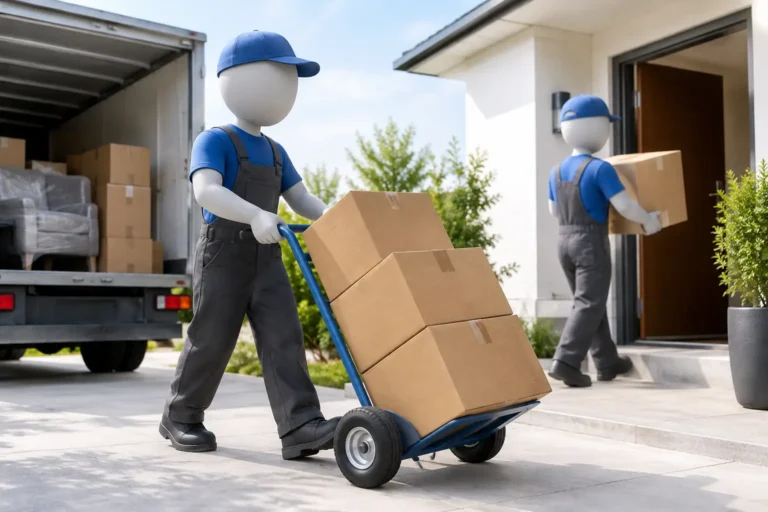
A rental truck can look like the cheapest choice until moving day turns into three flights of stairs, a heavy sectional, a tight parking spot, and a deadline to return the vehicle. The real question behind moving truck versus moving crew is not simply what costs less. It is which option gives you the right balance of price, time, safety, and control for the move ahead.
For some Connecticut moves, a truck and a few willing friends are enough. For others, professional movers prevent damage, injuries, delays, and a very long day. Knowing where your move falls can help you make a decision with confidence.
Moving Truck Versus Moving Crew: The Core Difference
With a moving truck, you rent the vehicle and manage the job yourself. You handle the driving, loading, lifting, furniture protection, securing items inside the truck, and unloading. You decide the pace, but you also take on the physical work and the logistics.
With a moving crew, trained movers handle the heavy lifting and loading process. Depending on the service you choose, they can also provide packing, furniture disassembly and reassembly, protective wrapping, transportation, and unloading. You still direct where belongings go, but you are not responsible for figuring out how to get a dresser safely down a narrow staircase.
Neither choice is automatically right for every household or business. A small, simple move may be well suited to a rental truck. A larger move, a move involving valuable items, or a move with difficult access usually benefits from experienced help.
Start With the True Cost, Not the Advertised Price
A truck rental’s daily rate is only one piece of the budget. Mileage, fuel, insurance coverage, moving blankets, hand trucks, furniture pads, tolls, and extra rental time can change the final number quickly. If your plan depends on friends or family, consider whether you may need to buy food, arrange childcare, or take time off work to make the move happen.
A professional moving crew has a higher upfront price than a bare truck rental, but the estimate should account for the labor and equipment required to complete the job. For many customers, clear hourly pricing is easier to plan around than a low rental rate followed by several add-on charges.
The cost comparison also needs to include risk. Scratched hardwood, a damaged television, a broken bed frame, or an injury from lifting a sofa can make a do-it-yourself move far more expensive than expected. Licensed and insured movers provide a level of protection and accountability that a group of helpful friends cannot always offer.
When a Rental Truck Can Make Financial Sense
A truck can be a practical choice when you are moving a small studio or lightly furnished apartment, have easy ground-level access, and are comfortable driving a larger vehicle. It can also work well if you have enough dependable helpers who understand the commitment and can stay for the full job.
This route is most manageable when your belongings are already packed, your furniture is limited, and your schedule has room for surprises. A short move between two accessible locations is very different from moving a full home from a third-floor walk-up into a house with a steep driveway.
When a Moving Crew Offers Better Value
Professional help often becomes the better value when time is tight or the move is physically demanding. Families coordinating school schedules, seniors transitioning to a new home, and business owners trying to avoid operational downtime have more to lose from a delayed move.
A crew also makes sense when you have large furniture, fragile belongings, antiques, artwork, exercise equipment, or a piano. These items require more than strength. They require the right equipment, careful planning, and people who know how to protect both the item and the property around it.
Time Is Usually the Biggest Difference
Most people underestimate how long it takes to move. Loading a truck is not just carrying boxes from point A to point B. Every item needs to be wrapped, carried safely, placed strategically, and secured so it does not shift during transport. Then the process starts again at the destination.
A trained crew works as a coordinated team. They know how to build stable tiers in the truck, protect corners and doorways, maneuver bulky items, and keep the job moving without sacrificing care. What might take a household all day can often be completed in far less time with the right number of movers.
This difference matters even more on a local move with building rules, elevator reservations, limited loading zones, or a narrow time window. Missing an elevator appointment or a closing deadline can create costs and stress that are difficult to recover from.
Consider the Physical Demands Honestly
Moving is strenuous work, even for people who are generally active. A mattress may be awkward rather than heavy. A solid wood dresser may be both. Carrying either one around corners, down steps, or through rain adds another level of difficulty.
Before choosing a truck-only move, think about who will actually do the lifting. Are your helpers able to carry heavy items safely? Do you have someone who can guide furniture through tight spaces? Will anyone know how to use lifting straps, dollies, and protective padding correctly?
Professional movers are trained to work safely and efficiently. They bring the muscle, but more importantly, they bring a process. That can make a meaningful difference for seniors, people with injuries, parents managing young children, and anyone who does not want moving day to end with a strained back.
Protecting Furniture, Floors, and Fragile Items
Damage often happens during the first and last few feet of a move. A table leg catches a doorway. A box slides in the truck. A couch brushes against a freshly painted wall. These are common problems when people are rushing or have not moved large items before.
A professional crew typically uses moving pads, shrink wrap, dollies, and other equipment to protect belongings. They also understand how to load a truck so weight is distributed properly and fragile items are not crushed by heavier boxes. Careful loading is especially important when a move includes mirrors, glass furniture, electronics, or family heirlooms.
If you decide to rent a truck, do not skip protective supplies to save a few dollars. Use enough blankets and straps, label fragile boxes clearly, and keep valuable documents, medications, and small irreplaceable items with you rather than in the truck.
Driving and Logistics Are Part of the Job
A moving truck is longer, wider, heavier, and slower to stop than a personal vehicle. You may need to navigate Connecticut parkways, tight residential streets, low branches, apartment parking lots, and unfamiliar loading areas. Some routes also have vehicle restrictions that need to be checked before you leave.
Then there is timing. You need to pick up the truck, inspect it, load it, drive it, unload it, refuel it, and return it by the required time. A single delay can affect the entire schedule.
A moving crew removes much of that coordination. At Advantage Moving & Storage, trained uniformed crews handle local moving logistics with careful communication, licensed and insured service, and no-deposit scheduling. That gives customers more room to focus on the new home, new office, or other priorities waiting on the other side.
A Hybrid Move Can Be the Right Answer
You do not always have to choose between doing everything yourself and handing over every task. A hybrid approach can be an excellent fit when you want to pack your own boxes but need professionals to handle the loading, heavy furniture, transportation, or unloading.
This option can help control costs while removing the parts of moving that create the most risk. It is particularly useful for customers who are organized and ready to pack but do not have the equipment or extra hands required for a safe move.
Choose Based on What Your Move Requires
A rental truck is a reasonable option for a small, straightforward move with flexible timing and capable help. A moving crew is often the smarter choice when the move involves stairs, large furniture, fragile items, a busy schedule, or a need for dependable handling from start to finish.
The best decision is the one that protects your belongings, your budget, and your energy. Before booking, picture the hardest part of your move – not the easiest. If that part feels like too much to manage alone, bringing in an experienced crew can turn moving day into a task you can actually look forward to finishing.