A conference table that will not clear a doorway, a cubicle panel with no matching hardware, or a desk drawer full of loose files can delay an entire office move. A clear office furniture disassembly guide prevents those small problems from becoming expensive moving-day surprises. The goal is not to take apart every item possible. It is to make furniture safer to carry, protect the building, preserve hardware, and get your team operational faster at the new location.
For a small office, careful preparation may be enough to handle basic desks and chairs in-house. For a larger relocation, modular workstations, executive furniture, and crowded timelines usually call for experienced commercial movers. The right approach depends on the furniture, access conditions, and how quickly your business needs to reopen.
Start With a Furniture and Access Plan
Walk the office before anyone picks up a screwdriver. Identify what needs to be disassembled, what can move intact, and what should be handled by a specialist. Standard rolling chairs, lightweight side tables, and narrow file cabinets may travel safely as assembled pieces. Large desks, conference tables, cubicle systems, shelving units, and reception counters often need partial or full disassembly.
Measure the furniture and compare it with the elevator, hallways, stairwells, loading dock, and door openings at both locations. A desk may fit through an office door but fail to make the turn into a narrow hallway. Knowing that before moving day lets you plan the right labor, equipment, and disassembly level.
Also confirm building requirements early. Connecticut office buildings may require a certificate of insurance, scheduled elevator access, loading-dock reservations, floor protection, or after-hours work. These details affect the moving plan just as much as the furniture itself.
Decide What Should Stay Assembled
Disassembly adds time, and every removed part creates a chance of loss or damage. Keep an item intact when it is sturdy, fits the route, and can be safely wrapped and carried. Consider disassembly when furniture is oversized, top-heavy, fragile, modular, or difficult to grip.
A heavy lateral file cabinet deserves special attention. Empty it before moving, even if the drawers lock. Removing the contents reduces weight, protects the cabinet rails, and keeps records from shifting. Tall bookcases and storage cabinets should be emptied and assessed for removable shelves, doors, and tops.
Gather the Right Tools Before Disassembly
Searching for an Allen key while a moving crew waits is an avoidable delay. Review manufacturer instructions if they are available, then gather tools and packing materials in one clearly marked area. Most office furniture can be prepared with the following supplies:
- Screwdrivers, Allen keys, adjustable wrenches, and a socket set
- Painter’s tape, permanent markers, and resealable hardware bags
- Moving blankets, stretch wrap, corner protectors, and corrugated cardboard
- A drill with appropriate bits, used carefully to avoid stripping fasteners
- A phone or camera for reference photos and labeled documentation
Use hand tools whenever possible on furniture made from particleboard, veneer, or softer wood. Power tools can save time, but too much torque can strip screws, crack panels, or damage threaded inserts. If a fastener resists, stop and check whether there is a hidden locking mechanism or a different access point.
The Office Furniture Disassembly Guide: Work One Piece at a Time
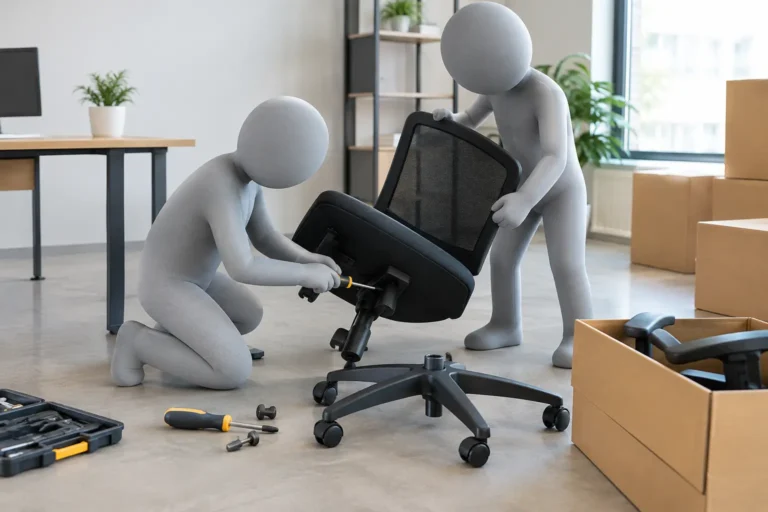
The most dependable method is simple: complete one furniture item from start to finish before beginning the next. Photograph it assembled, empty it, disconnect anything attached, remove the required components, bag the hardware, and label every part. Avoid creating a room full of half-disassembled furniture with mixed screws and unidentified panels.
Label Parts for Fast Reassembly
Use a labeling system that tells the setup crew exactly where each component belongs. For example, label a desk as “Marketing Desk 3,” then mark its pieces “Marketing Desk 3 – Left Pedestal,” “Marketing Desk 3 – Top,” and “Marketing Desk 3 – Hardware.” Put the hardware bag inside a taped drawer or secure it directly to a wrapped component.
Do not tape hardware bags directly to finished wood, glass, or painted surfaces. Adhesive can leave residue or pull at delicate finishes. Instead, place the bag in a clearly marked box or tape it to protective wrapping.
Photos are equally valuable. Take wide shots of the assembled item, close-ups of brackets and cable paths, and pictures of any unusual hardware. A few minutes of documentation can save an hour of guesswork when the new office needs to be ready for business.
Desks, Tables, and Workstations
For desks, start by removing drawers, keyboard trays, detachable hutches, and loose shelves. Disconnect power strips and cable-management trays before separating the desktop from pedestals or legs. Wrap finished surfaces immediately after removal, especially glass tops and veneer panels.
Conference tables commonly come apart in sections. Remove the tabletop leaves or sections first, then legs, bases, and support beams according to the manufacturer’s design. Keep each table’s connectors together. Mixing hardware from similar-looking tables is one of the most common causes of reassembly delays.
Cubicles and modular workstations require more planning. Shut down and disconnect computers, phones, monitors, and power systems before panels are removed. Label panels by workstation number and note their orientation, such as north wall, side panel, or return. If electrical components run through the furniture system, use qualified personnel for disconnecting and reconnecting those components.
Chairs, Shelving, and Reception Furniture
Most office chairs can move assembled if they fit through the route and are protected from scuffs. Remove detachable headrests, arms, or loose cushions only when necessary. Avoid taking apart gas-lift mechanisms unless the manufacturer specifically directs it. These parts are not designed for casual disassembly.
Disassemble tall shelving units and bookcases when they are likely to flex, tip, or snag during transport. Remove shelves, doors, and adjustable hardware, then wrap each panel to prevent scratches. Reception desks often have hidden connections, built-in wiring, and multiple sections. Treat them like a workstation system rather than a simple desk.
Protect Technology and Building Surfaces
Office furniture and office technology often overlap. Before taking apart any workstation, make sure computers are shut down, data is backed up, and cords are labeled at both ends. Pack monitors separately in properly sized cartons or protective cases. Never use furniture blankets as the only protection for screens during a commercial move.
Protect the office, too. Use floor runners where furniture will be moved, corner guards in tight corridors, and elevator pads where required. Tape down or remove trip hazards during the process. An efficient move should not leave behind damaged walls, scratched flooring, or a workplace safety issue.
Know When Professional Movers Are the Better Choice
There is a practical limit to a do-it-yourself office move. Consider professional commercial moving support when the job involves cubicles, oversized furniture, multiple floors, expensive equipment, tight building rules, or a deadline that cannot move. Professional crews bring trained labor, moving equipment, protective materials, and a coordinated plan for loading and setup.
Advantage Moving & Storage helps Connecticut businesses manage office relocations with careful handling, clear communication, and scheduling options designed to reduce downtime. Licensed and insured movers can also provide reassurance when valuable office assets and building requirements are part of the job.
Before booking any mover, ask how they handle furniture disassembly, hardware labeling, floor protection, elevator coordination, and reassembly at the destination. The lowest hourly rate is only a good value when the crew has a plan to keep the work moving safely and efficiently.
Prepare the New Office Before Delivery
Disassembly is only half the project. Have a floor plan ready before the truck arrives, with each workstation, desk, and conference table assigned to a location. Mark offices and departments clearly. Confirm that paths are clear, utilities are ready where needed, and the person approving furniture placement is available.
Reassemble essential work areas first: reception, leadership offices, customer-facing spaces, and the teams that must resume work immediately. Less urgent storage furniture can follow. Keep the hardware bags and reference photos accessible until every item is built, stable, and functioning.
A well-planned office move does more than get furniture from one address to another. It protects the equipment your team relies on, limits disruption, and gives employees a more organized first day in the new space.